



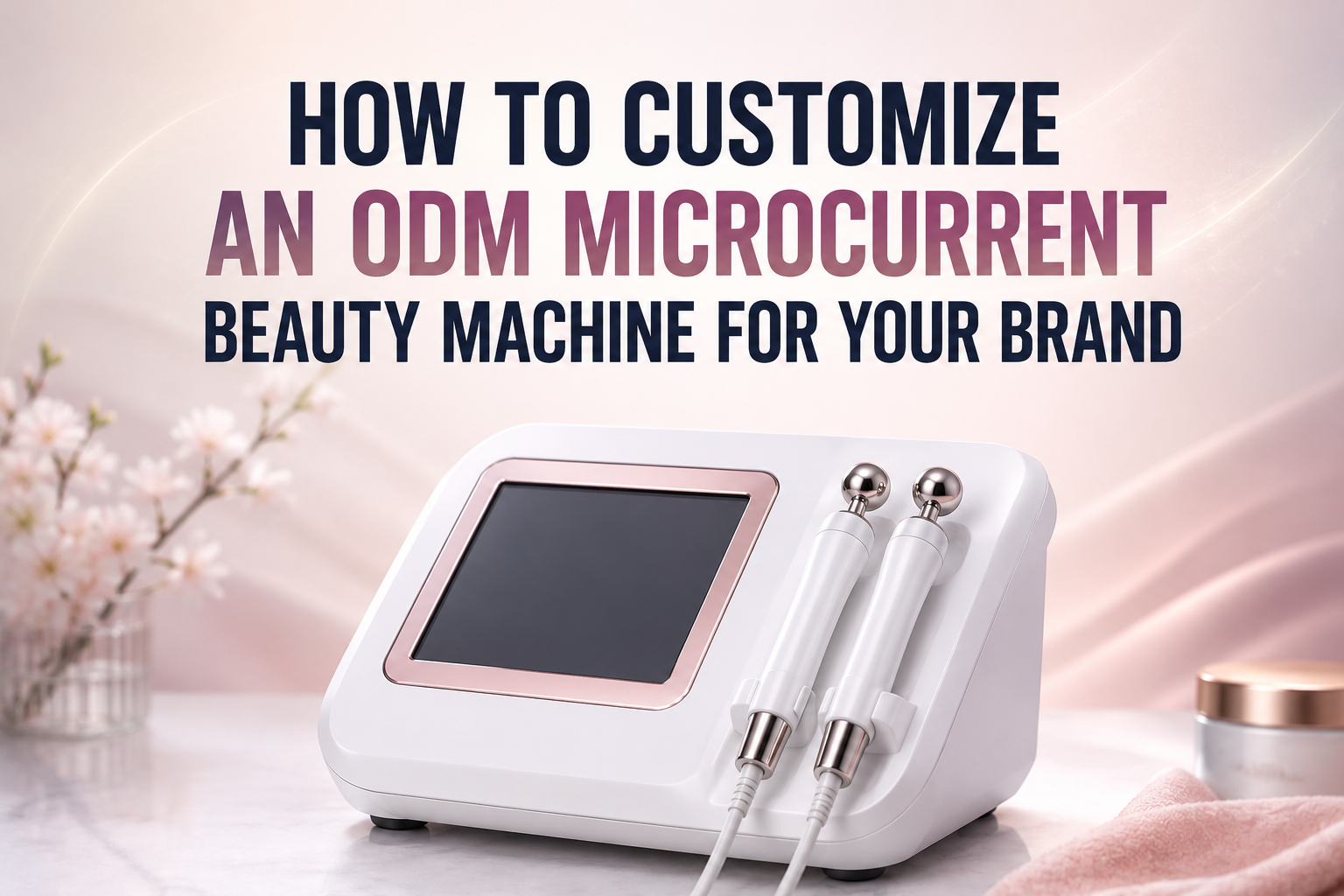
Today, more brands wish to have their own equipment line. Many owners today opt to buy ODM microcurrent beauty machines rather than resell them under another brand. The factory makes the machine, while the brand works on its appearance and functionality. This may seem complicated, but in actuality it's simple.
This article will take you through what customization means, what it can be done in, and how to plan from start to finish.
ODM is Original Design Manufacturer. To put it simply, the factory already has a functional machine design. Your brand can then request changes to fit your style and market. It is not like OEM, where you design the product, and the factory manufactures it. This is because ODM is a faster and generally cheaper option, as the basic design is already tried and tested.
For a microcurrent beauty machine, it means that the inside technology, such as the microcurrent output and security features, is proven. You don't start from scratch; you focus on a brand's outer appearance, packaging, and little details.
Creating a completely new device from scratch needs a large budget for testing and certification. ODM skips most of that. Your product is unique; the base machine is already certified, saving your brand time and money.
Many important parts of a microcurrent machine can be changed, but not everything. When brands know what's possible, they better plan their budget and time.
The simplest of things to change in the machine is its casing. Most factories will have a selection of colors available as well as finishes. Some will even accept custom colors for a large order. By using a clean, modern shell, the machine can become a part of your brand's overall look.
Adding your logo to the machine is usually included in ODM customization. This may be printed on the device or screen, the charging stand, or the box. Some factories also offer laser engraving services for a higher level of quality.
Several microcurrent machines feature a small display screen with settings and modes. Brands can also opt for custom screen designs that incorporate their logo, color scheme, or a simplified one modeled after a desired user, home user, or professional clinic.
We tend to overlook packaging, but it's a significant issue with customers' perception of the product. Brands can select box design, inserts, manuals, and even box accessory colors such as charging cables or a pouch for storage. This can help make the unboxing experience like a full brand experience.
Customization typically incurs an incremental per-unit price, particularly for low order quantities. Larger orders significantly lower the cost per unit. Most factories have a minimum order quantity for full customization.
Typically, it begins by selecting a base machine model. Then, the brand presents its logo, colors, and packaging concepts. The factory produces samples for approval, and then mass production begins.
It's easier to get started customizing when the process is divided into steps. By skipping steps, quality issues, delays, or errors in production will result.
The first thing to do is choose a base microcurrent machine that matches your desired features. This includes special features such as LED light therapy, battery life, and intensity levels.
Give the factory the brand logo files, brand colors, and design references. The right formatting helps to save time and prevent mistakes during production. Logos typically work best with vector files.
Most factories will provide a sample or digital mockup prior to mass production. It is the time most suitable for spotting errors. Make a careful inspection of the logo, color, and screen display before approving.
After getting approval for your machine design, proceed with packaging. It is the time most suitable for spotting errors. Be sure to inspect the position of the logo, color accuracy, and screen display before approving.
Once it is all fine, the factory goes into mass production. This cannot be reversed, so carefully finalize after reviewing.
* There are a lot of brands that are rushing through sample review. This frequently causes color variation or logo positioning problems that aren't discovered until a significant amount of product has been produced. Extra time taken with sample approval equals savings of money and stress later.
* Another frequent error is failing to inquire about any changes to certification. Changes to internal components, rather than the exterior appearance, will impact previously obtained safety certifications. Always verify with the factory if your requested changes affect certification status.
* Other brands also fail to deliver their packaging plans on time. The packaging design and printing can be as delayed as the machine customization. By initiating these processes simultaneously, launch delays can be avoided.
Beauty devices that come into contact with the skin should comply with safety standards. Search for any certifications, such as CE, that indicate that the device adheres to minimum safety and quality standards. This is especially important for any electronic devices used on the face.
Inquire with the factory about which certifications apply to the base machine and whether any certifications have changed due to customization. A good factory will never hide it and will give documents upon request.
* Not all factories have the same degree of customization. Some will only do logo printing; others will do complete design changes of the packaging, screen software, and accessories. Before signing a deal, it's a good idea to make sure you understand what cannot be changed.
* The best supplier will also provide references for past projects and brands they've assisted. This provides better insight into their customization options and manufacturing processes. Request pictures or videos of new or finished custom units to prevent unexpected situations.
* This process also depends largely on the speed of communication. A fast-answering factory that provides a sample promptly will make the entire process smooth. If communication is slow, deadlines will be missed, particularly for brands with a set launch date.
Most of the factories will have a minimum order quantity, commonly called MOQ. The amount of customization requested can cause this number to change significantly. Standard logo printing might require smaller quantities, but custom molds or unique casing shapes typically require larger orders to be economical.
New brands should discuss MOQ at an early stage. This prevents time loss when dealing with options that are not correct for the order sizes. Some factories will take smaller trial orders before production, so testing the market first may be safer and more reasonable.
With a customized ODM microcurrent beauty machine, brands can tailor the machine and device without having to start from scratch. Whether it's in color, logo, packaging, or screen design, your product can feel like your own in numerous ways. With the proper planning, a custom machine can be an effective marketing asset for years.
1- Where to buy microcurrent beauty machines in bulk for retail business?
The best place to purchase in bulk is to order from a supplier that specializes in manufacturing beauty devices and offers wholesale rates. Always check the certifications before sending off a bulk order.
2- Where to purchase the microcurrent beauty machine in wholesale at affordable rates?
Research the prices with a couple of trusted suppliers and inquire about bulk discounts. Bulk orders tend to result in cheaper unit prices.
3- Who is the best microcurrent beauty machine supplier that can customize?
Look for suppliers who advertise ODM or OEM services on their website. There are many equipment suppliers that will provide customization information right for the bulk buyer.
Highlights • Certificati
READ FULLHighlights • Fla
READ FULLBeauty clinics nowadays require numerous instruments to make their customer satisfied. One mach
READ FULL
Have a question or need a quote? Fill out this form and our team will get back to you quickly!
